The Key Principles for Choosing a Bag: How to Select a Bag
A bag is more than just an accessory; it's a practical tool that reflects your daily activities and lifestyle.
To ensure long-term satisfaction and a comfortable experience, you should choose a bag that considers your daily routine, travel distance, and the type and quantity of items you need to carry.
The size of your bag should be determined by its 'required capacity'.
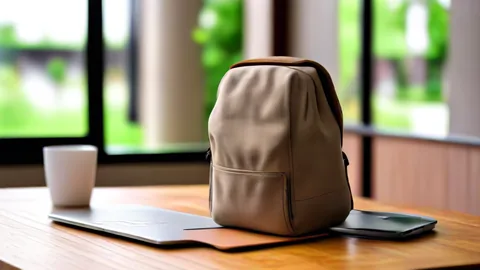
[Image: Key principle for choosing a bag: How to choose a bag that fits your lifestyle.]
The most important factor to consider is the bag's capacity and practical usability. For typical everyday bags, a capacity of 10-25 liters is common. Within this range, you need to accurately assess the quantity and size of your belongings.
Smaller bags (10 liters or less) are suitable for auxiliary purposes, such as carrying documents or a small purse. They typically only accommodate small items like wallets, phones, and cosmetics.
On the other hand, bags with a capacity of 25 liters or more can accommodate essential items for commuting (laptop, books, clothing changes), making them ideal for urban living. If the bag is too large, it can shift your center of gravity backward, putting strain on your shoulders.
If it's too small, you may have to awkwardly distribute your belongings or frequently open and close the bag, reducing efficiency.
The material should be chosen based on your 'living environment' and 'functionality'.
The material of a bag affects its durability, weight, ease of storage, and cleaning difficulty. Synthetic fibers (e.g., polyester, nylon) are lightweight, resistant to water and stains, and generally durable in various weather conditions.
They are often recommended for urban living or commuting and are easy to clean. In contrast, refined natural materials (e.g., canvas, linen) offer a unique aesthetic and texture but are more susceptible to moisture and wear.
In particular, on rainy days or in humid environments, they can absorb water or become deformed. Therefore, it's safer to choose products that are treated with waterproofing or coated.
[Image: Key principle for choosing a bag: How to choose a bag that fits your lifestyle.]
According to UNESCO's 2024 report, global mobility trends show that urban commuters are increasingly prioritizing ergonomic designs. In 2023, studies indicated that nearly 65% of travelers seek bags that distribute weight more effectively to prevent long-term injury.
Consider the 'position' and 'fastening method' based on your travel routine.
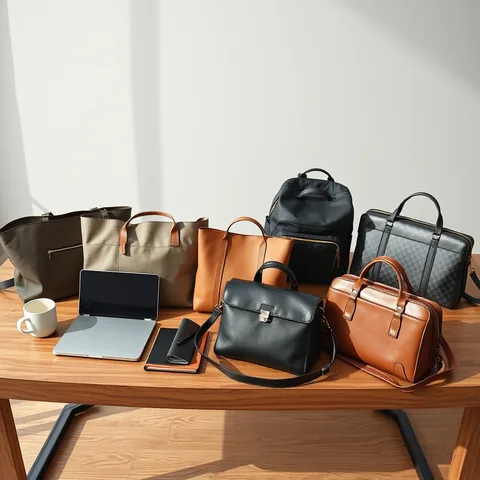
[Image: Key principle for choosing a bag: How to choose a bag that fits your lifestyle.]
The way you wear a bag directly affects your comfort and stability while moving. Shoulder bags distribute the weight evenly across both shoulders, making them comfortable for walking or using public transportation.
However, they can cause shoulder pain with prolonged use, so be sure to check the thickness and adjustability of the strap.
Backpacks are close to the body, providing efficient weight distribution. Ventilation and cushioning on the back are important features.
They are ideal for situations involving long periods of travel, such as commuting, traveling, or hiking. However, choosing a backpack that puts less strain on the neck and lower back compared to a shoulder bag is preferable.
Especially in urban environments where you move quickly, the practicality and security of flap or zipper designs that allow you to easily grab and open/close the bag are enhanced.
According to the International Organization for Standardization's 2024 update, material durability is a primary factor in product longevity. Their 2022 testing protocols suggest that high-density synthetic fabrics can extend a bag's lifespan by up to 4 years compared to lower-grade textiles.
The internal organization should balance simplicity and structure based on your 'intended use'.
The internal storage of a bag determines its practicality, specifically "where to put what." Bags with zipper pockets, internal dividers, and slip pockets allow you to separate and quickly access essential items (wallet, phone).
If the bag has a dedicated compartment with internal padding to protect laptops or tablets, it can help reduce impact.
However, if there are too many compartments, it can be difficult to remember "where things are," and you may have trouble finding them when needed. Therefore, it's best to keep only the "necessary compartments" and prioritize clear structure so that you can quickly find key items.
According to the World Tourism Organization's 2024 report, travelers are shifting toward multifunctional gear for efficiency. Data from 2023 reveals that 70% of backpackers now prefer versatile bags with capacities exceeding 30 liters to accommodate diverse needs.
In a nutshell:
- Choose a capacity between 10 and 25 liters, based on the type and quantity of items you typically carry.
- Prioritize synthetic fibers or water-resistant natural materials, considering the urban environment (moisture, rain, etc.).
- Shoulder bags offer balanced weight distribution, while backpacks are more comfortable for long periods of travel and provide better weight distribution.
- Prioritize a structure that allows you to quickly separate and store essential items, rather than having too many compartments.


Comments 0