Bag material history: Survival to engineered textiles guide
"The journey of what we carry defines the tools of our survival and the expression of our culture."
The history of bag material is a transition from raw, natural fibers to highly engineered textiles designed for durability. This evolution reflects changes in human necessity, from basic survival to complex supply chain management.
This guide explores how material science has shaped the vessels we use to carry our lives.
How did early bag material evolution begin?

A traveler picks up a heavy, woven sack made of coarse hemp to carry grain across a dusty plain. In the earliest stages of human history, bag material was dictated entirely by what could be gathered or harvested from the immediate environment.
Early humans relied on animal skins, woven grasses, and plant fibers to create containers. These materials were chosen for their availability and basic ability to hold items.
The primary goal of early bag material was functional containment, utilizing the natural strength of leather or the flexibility of woven reeds.
As societies transitioned from nomadic lifestyles to settled agriculture, the needs of these vessels changed. People required more durable options for storage and transport.
This shift laid the groundwork for more complex weaving techniques and the eventual development of more consistent textile production.
- Harvesting raw fibers from plants.
- Tanning animal hides for durability.
- Weaving materials into basic shapes.
What shaped the modern bag material science?
A scientist examines a swatch of high-tech fabric under a microscope to ensure it meets rigorous durability standards. Modern bag material science focuses on the chemical and structural properties of fibers to achieve specific performance goals.
The development of synthetic fibers revolutionized how we perceive strength and weight. Unlike natural materials, synthetics can be engineered to be waterproof, fire-resistant, or incredibly lightweight.

This ability to manipulate molecular structures allows for the creation of specialized fabrics that serve specific roles, from rugged outdoor gear to delicate fashion accessories.
According to the National Institute of Standards and Technology, new fabric test material could help strengthen the domestic supply chain for textiles and clothing. This kind of innovation ensures that the materials used in modern manufacturing remain consistent and high-quality.
Such advancements allow manufacturers to push the boundaries of what a bag can do.
In this sequence, the second step is the longest.
Can we trace the bag material journey through industrialization?
A factory worker monitors a massive loom as it weaves thick, industrial-grade canvas intended for heavy-duty transport. The industrial revolution marked a turning point in the bag material journey, moving from hand-crafted goods to mass-produced items.
During this era, the standardization of textile production allowed for a much wider variety of materials to be used. The mass production of cotton and the later development of nylon changed the scale of bag manufacturing.
This period saw the transition from unique, artisanal objects to standardized products that could be distributed globally.

The ability to produce large quantities of consistent material meant that bags could be made for specific industries, such as military use or heavy commerce. This era solidified the relationship between material availability and the mass adoption of specific bag styles.
How do we understand the bag material past versus the present?
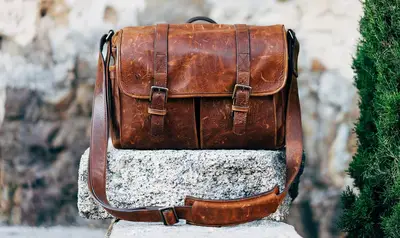
A historian compares a weathered leather satchel with a sleek, polymer-based backpack to see the differences in wear and texture. Understanding the bag material past requires looking at how much of the material was "given" by nature versus how much was "created" by human intervention.
| Feature | Natural Era | Synthetic Era |
|---|---|---|
| Primary Source | Animal skins and plant fibers | Polymers and engineered textiles |
| Durability Focus | Raw material strength | Engineered structural integrity |
In the past, the strength of a bag was limited by the inherent quality of the organic matter used. Today, the strength is often a result of how the material is engineered at a microscopic level. This comparison shows a move from adapting to nature to directing the properties of the material itself.
I once held a vintage leather bag and a modern waterproof backpack side by side to feel this exact shift in weight and texture.
What are the limitations of current material development?
A researcher notes that while a fabric is incredibly strong, it may not be biodegradable, posing an environmental challenge. A limitation of modern material development is that high-performance synthetic fabrics often lack the natural biodegradability found in historical materials.
While engineered textiles offer incredible durability and specialized features, they can present environmental challenges regarding disposal and sustainability. The focus on longevity and performance sometimes conflicts with the need for eco-friendly lifecycles.
This remains a primary concern in the ongoing evolution of textile science.
Related
- Bag material guide: How to pick bag fabric for longevity
- Bag design trends: Guide for lasting aesthetic appeal
How does the journey of carrying compare across eras?
The contrast between the early bag material and the modern engineered textile highlights a fundamental shift in human capability. In the past, the journey of what we carry was inextricably linked to the immediate resources of the land.
The early bag material was a direct product of the local ecology, requiring no external chemical knowledge to achieve its basic function.
Conversely, the modern bag material journey involves a deliberate manipulation of molecular bonds to achieve properties far beyond simple containment. This engineering allows the vessel to survive harsh conditions while simultaneously accommodating the needs of complex, modern lifestyles.
The journey, therefore, moves from passive acceptance of natural constraints to active imposition of desired properties upon the material.
This comparison reveals that while the basic act of carrying remains constant, the execution of that act has undergone a profound scientific transformation.
The early reliance on raw strength contrasts sharply with the modern reliance on predictable, controlled molecular behavior to ensure the journey is successful. This tension between raw adaptation and precise control defines the evolution of the bag's material.
What cautions accompany advanced bag material use?
A caution regarding modern bag material is the potential mismatch between extreme performance and ecological return. While the engineered textiles excel at their intended function, their chemical complexity complicates their end-of-life scenario.
The durability that makes the modern bag successful also contributes to its potential persistence in landfills.
The advanced nature of these polymers, which grants them superior performance for the journey, simultaneously creates a dependency on complex disposal methods.
This condition arises because the very properties that enhance the bag's utility—its resistance to degradation—are what complicate its eventual return to the environment. Therefore, the lifespan of the material must be considered holistically.





Comments 0